Cider Brined Pork Chops with Maple-Bacon Chutney

Sweet Maple Bacon on top a moist Pork Chop…why not?!

This recipe combines two of my favorite cuts of pork and is fancy enough for a 5-star restaurant.

Perfect for a Valentine’s Dinner for 2 at home!

Here are the supplies you’ll need:

INGREDIENTS:

IMG_5872.JPEG
  • 4 Nourished With Nature Pork Chops

For the cider brine:

  • 3 quarts cold water

  • 1 quart apple cider

  • 1/2 cup apple cider vinegar

  • 1 1/4 cup salt (I like Redmond Sea Salt)

  • 3/4 cup Agave (can substitute honey or sugar)

For the maple-bacon chutney:

IMG_5876.JPEG
  • 1 lb Nourished With Nature Bacon ends, diced

  • 1 small onion, diced

  • 3 cloves garlic, minced

  • 1 cup maple syrup

  • 1 Tbsp black pepper, coarsely ground

  • 1 Tbsp mustard powder

  • 2 cups apple cider

  • 1 bay leaf

  • salt to taste

INSTRUCTIONS:

  1. Add all the ingredients for the brine together.

  2. Add the pork chops to the brine in a 9x13 glass dish with a lid or plastic bag, and let brine in the fridge for 12-18 hours.

  3. In a medium saucepan sauté the bacon until half cooked. Drain off the rendered fat, add the onions, garlic and sauté until translucent.

  4. Add remaining ingredients and simmer until thick and syrupy. Remove bay leaf and salt to taste.

  5. Drain pork chops from the brine, rinse and pat dry before grilling.

  6. Place pork chops on medium to high heat, flip after 5-7 minutes when nice brown crispy bits begin to form. Internal temp should be at 160 deg F.

  7. Top with warm maple-bacon chutney.

  8. Enjoy!

Order your bacon and pork chops online then swing by the farm store to pick up at your convenience.

You can also choose to pick up at the farmer’s markets each week, just check our website for when and where.

Recipe adapted from Food Republic and Chef Rick Gresh
Recipe adapted from Food Republic and Chef Rick Gresh
13 Things That Make Our Pork Different

Hello! Welcome to our blog!

Today I’m going to share a few facts about our farming practices that are a little different than what we usually write about (recipes and how to’s) but equally important to understand.

Knowledge allows you to make a more educated decision about what you eat, where you get it from and how you vote with your food dollar.

Here are 13 Things That Make Our Pork Different from others. I am going to refer to “others” in general to cover everything from industrialized large scale farms to possibly your neighbor down the road who raised an extra hog this year. It could be the meat you find in grocery stores or in home delivery boxes too.

This comparison may sound like I’m harping or trash talking others, please know that is not my intention at all. I’m not trying to be condescending, but at the same time I know it’s hard for you-the meat eater-to know what is going on behind the scenes.

And if I don’t talk about it, and you don’t plan on becoming a farmer — how will you know???

I want you to be informed so you can make your own choices about how you eat and how you feed your family.

So here we go… 13 Things That Make Our Pork Different


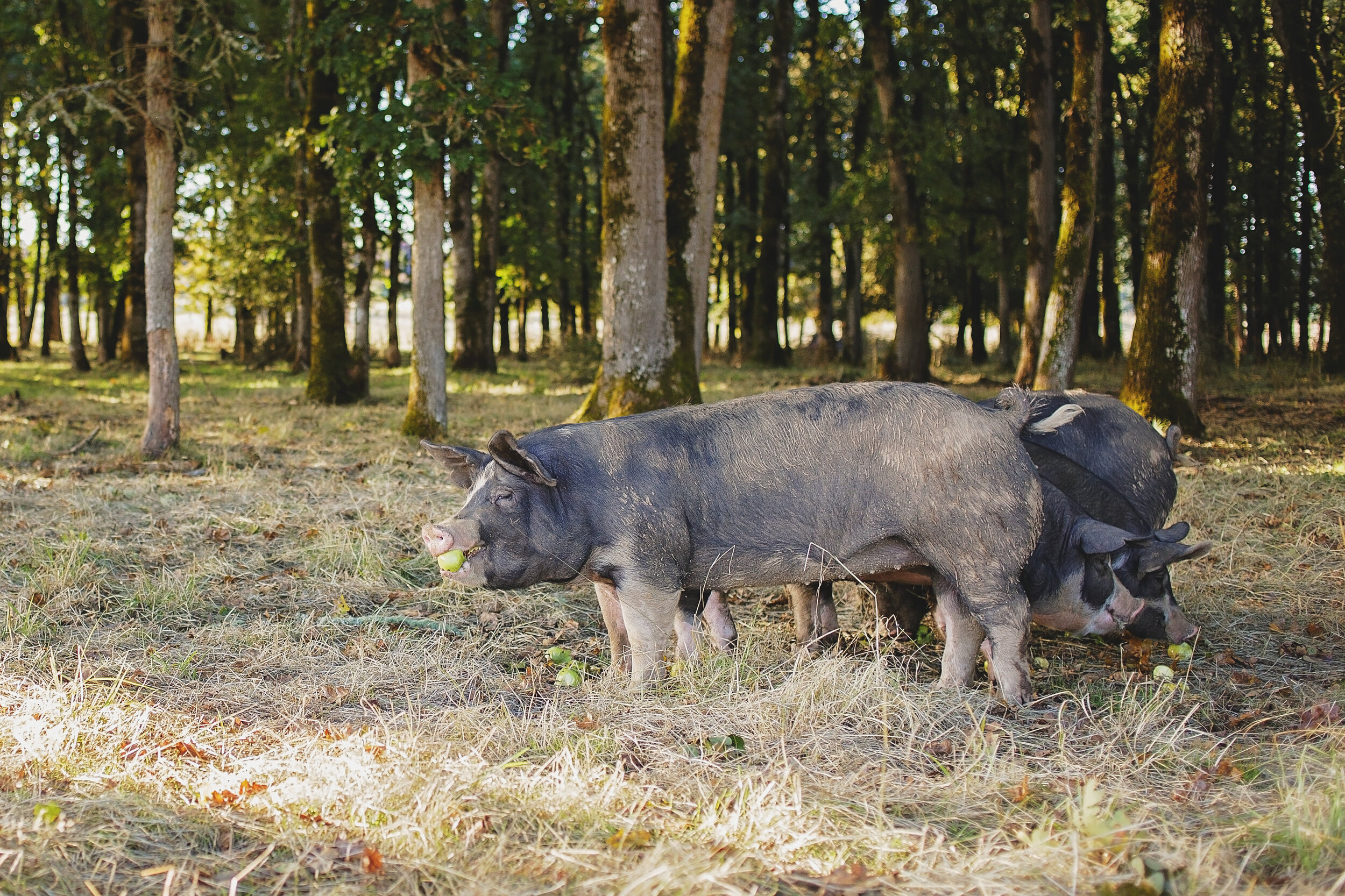
1. Our pigs take on the flavor of the seasons. They forage for acorns in the fall, they share our overproduction of garden goods and fallen fruit in the summer.
Others can be light pink in color, limp, tasteless, uniform, but every package is the same size!

print-0021.jpg

2. Our sows are from time-tested, proven, heritage breeds. They retain their instincts, their smarts & their careful mothering skills.
Others genetics may be more fragile, they aren't as robust or resilient, often needing more chemical de-wormers and human intervention during farrowing time.

3. Our pigs are bred as they cycle naturally, when the sow's body dictates.
Other pigs are given hormones to bring sows into heat on a schedule that is most profitable, and convenient for the farmer, even if it’s artificial.

4. Our sows are free to labor and deliver, move about and build a nest unconfined.
Most other sows live in a crowded gestation pen before giving birth and a farrowing crate for 6 weeks after birth, only able to stand up and lay down in place.

Print-0029.jpg

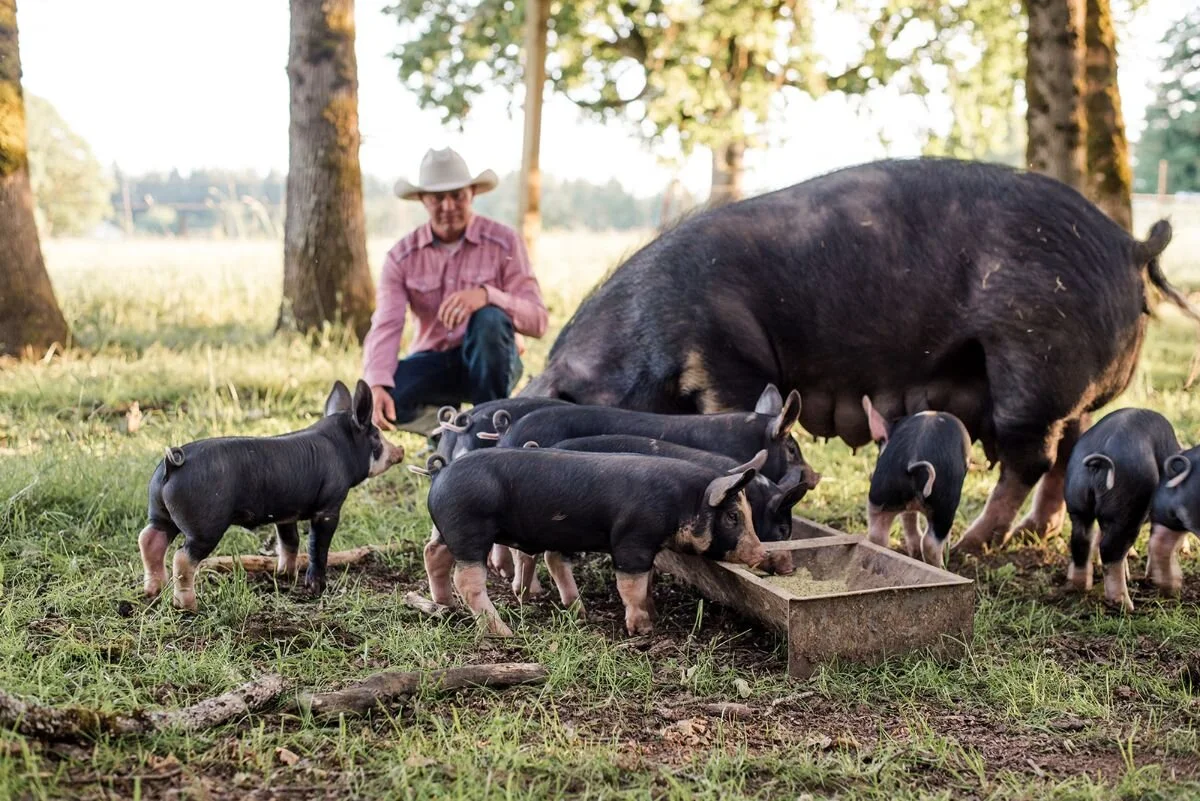
5. Our piglets live with their mother and weaning is delayed until 6-8 weeks old.
Other piglets get weaned at 17-21 days old.

6. Our pigs are raised outdoors, in the dirt, mud, pastures and sunshine which builds stronger immune systems and negates the need for regular antibiotics.
Other pigs are raised on concrete floors inside buildings under artificial light.

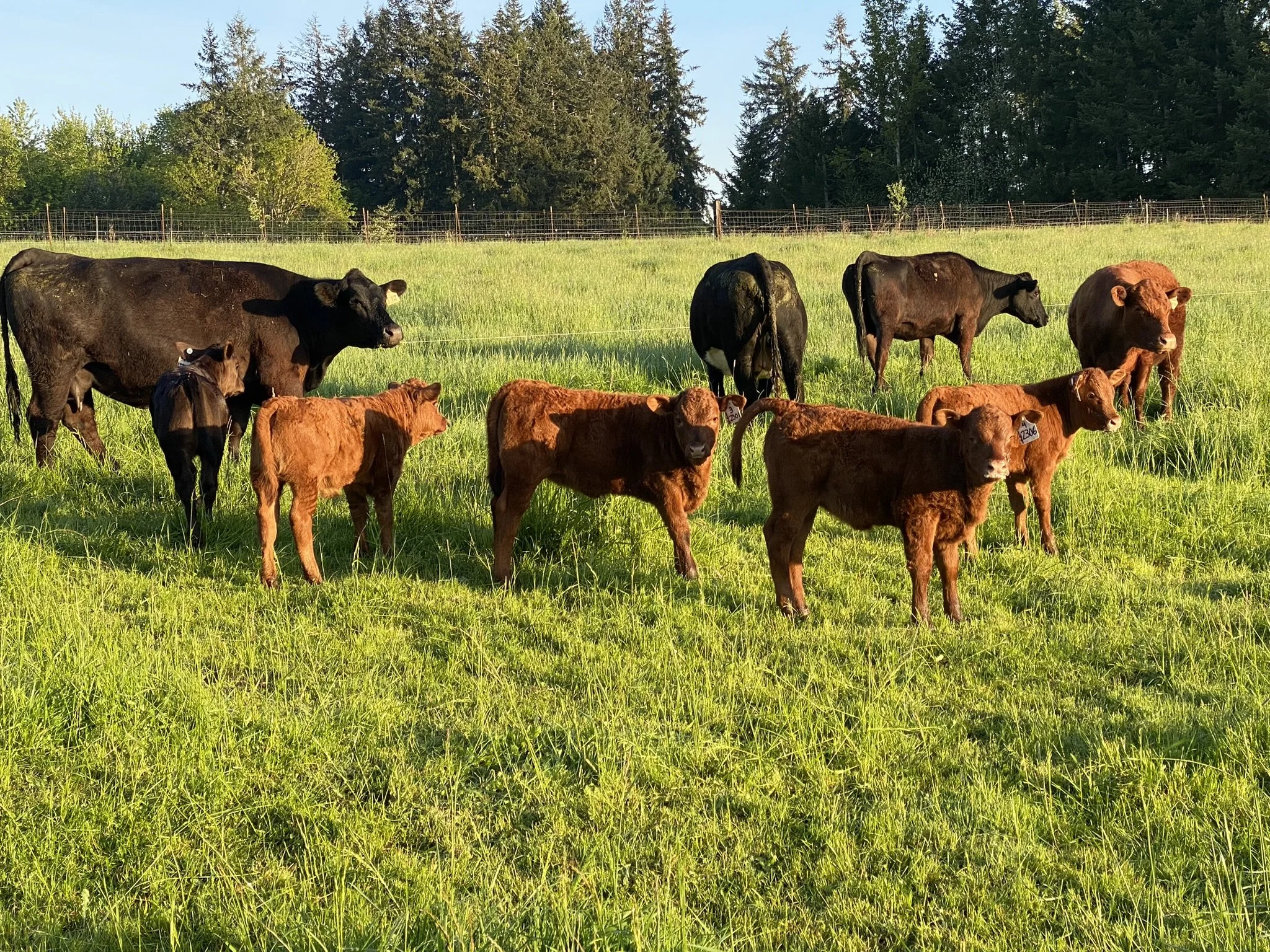
7. Our pigs are raised with 10's of thousands of square feet to roam, forage and explore.
Other pigs raised in confinement are allowed 7.5 square feet as an industry requirement.

8. Our pigs are able to soak in the sunshine living on pasture, making their lard one of the richest sources of dietary Vitamin D available.
Other pigs may just see artificial fluorescent lights, which also tend to have an effect on their sanity. No gradual sunrise or sunset, just a flip of the switch from dark to light.

9. Our pigs are allowed to grow naturally, accumulating healthy body fat.
Other pigs are fed artificial muscle growth promoter and allowed very little movement throughout their lives. Their feet never touch the ground, they live suspended over metal slats or on concrete floors so that their pens can be washed more efficiently.

10. Our pigs grow slow but their bones are mineral rich, which makes great nutrient dense broth.
Other pigs are given growth hormones to speed up the turnover time, resulting in an empty, limp and bland meat. You end up with extra synthetic hormones in your body too.

pigs.jpg


11. Our pigs are raised in small groups with their litter mates.
Other pigs are raised in warehouses containing a few thousand pigs. They often have displaced behaviors like chewing on their wire pens, repetitive motions, excessive calling.

12. Our pigs are fed non GMO corn and soy-free feed. Eliminating soy in their diet and ours helps keep the endocrine systems functioning best.
Other pigs are fed the cheapest ingredients with the highest yield-often corn and soy. These two feed ingredients are two of the heaviest sprayed and Round Up ready crops. Two of the "dirty dozen".

13. Our pigs are raised with regeneration in mind. Happier, slower, better, healthier and adding fertility back into the soil each day.
Other farmer’s process is all about faster, bigger, cheaper. Our health and the environment suffer under this mindset of cutting corners.

pigs and boys.jpg

Now you have more knowledge to make a decision about where you source your pork.

You can feel good about what you are feeding your family.

We have bulk buying options if you are interested in a half or whole hog.

You can always check what is in stock right now by visiting our online web shop.

Top 10 FAQs about Buying Half a Hog

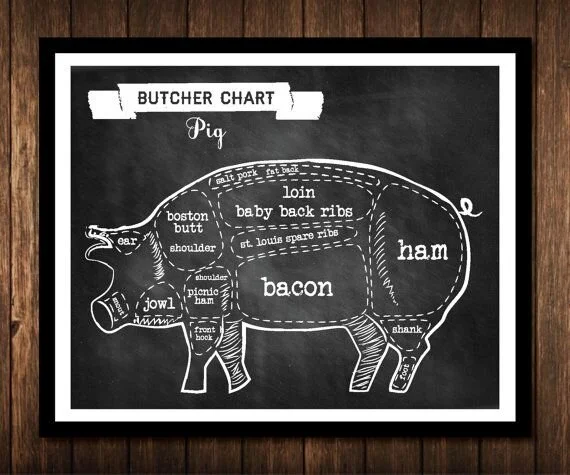
chalk_pig_3.1.png

How much meat do I get with half a hog?

You will receive between 70-80 pounds of meat ready to go in your freezer. The hanging weight of half a hog can vary, but is usually around 100 lbs.  Once the meat is cut from the bone and packaged some water weight is lost to evaporation so it yields 70-80% of the hanging weight.


How much freezer space do I need for a ½ hog? 

About 4 cubic feet.  Do you remember when all we used were the Top Freezer Refrigerators? The freezer unit was on top the refrigerator?  Those were about 4 cubic feet.  Or the freezer portion of a Side By Side Freezer Fridge would also hold a ½ hog.


What is the hanging weight?

The hanging weight is the weight of the animal once the head, hide, feet, and entrails have been removed. This is the weight you will be charged by. It’s the most fair way to charge because different cutting preferences will yield different weights of packaged meat. You have the option of keeping the soup and broth bones as well as organ meat.

 
chalk hog.jpg

Can I customize what cuts I want?

Yes.  If you preorder your half or whole hog we can ask the butcher to cut and wrap according to your wishes. You have choices like what types of sausages you want made, how big your hams and roasts are, how thick you like your pork chops, whether you want Canadian Bacon or pork chops made.


What cuts are available with a half hog?

A hog is very customizable. You could grind the whole thing or smoke and cure the whole thing and it will still be delicious! Half or whole hog options are the same, you just get double the amount with a whole hog.  The available cuts include pork chops, Canadian Bacon or loin roasts, hams, ham hocks, tenderloin, roasts or shoulder steaks, bacon, sausages, ribs, organ meats, bones and the head if you want it.


When I buy a half hog do I get the front half or the back half?

When you buy a half hog you get a little bit of everything. The hog will be split down the spine, down a natural seam and you end up with two identical halves.


Are your pigs butchered on site or do they have to travel?

It depends. Although we would really love to have a mobile butcher come to the farm, if the entire animal is not presold we cannot legally do this. If we sell any individual cuts of meat in our farm store or at the Farmer’s Market it needs to be USDA inspected, and this can only be done at a USDA inspected facility. Mobile butchers are not USDA Inspected. Another factor is timing. We are having to schedule our butcher dates 12 months in advance, before our animals are even born, thank you covid. So this means that you too as the customer would need to put down your deposit and wait for a butcher date to be available. It requires a longer wait time and a layer of complexity that most aren’t aware of. We do however trailer our own animals and take charge of loading them in the most stress free way we can. We have gotten pretty good at this and most of the time our animals calmly walk right onto the trailer, never breaking a sweat or elevating their heart rate. We always get them settled the night before so if they did have any adrenaline from the trip they have time to relax overnight.

 
Print-0058.jpg

Do I pickup and pay for my meat at the butcher?

No. We take care of interacting with the butcher for you. We deliver the animal, hand over your cutting instructions, pay for the processing and pick up the meat for you. We know this process can be overwhelming and we want to make it as easy on you as possible. Your hog’s butchering costs are included in the price you pay us.


How long will it take our family to eat a half hog?

It depends on how frequently you cook at home and the number of people you’re feeding.  Our family of 5 (2 adults and 3 young children) eat a whole hog a year.  We also eat a quarter cow, a whole lamb and 60 chickens in a year’s time.  We do a lot of our own cooking, and you probably would too if you had it sitting in your freezer ready to go.


Can I come visit and see where/how the pigs are raised?

Print-0031.jpg

Yes! We would love that! And you will leave feeling happy about the type of life our hogs live. Frolicking in big pastures, free to socialize with littler mates, in the open air and sunshine, foraging for roots, acorns, nuts and bugs.


How do I reserve a half hog?

Just jump over to our website and make your deposit. This saves your place in line and the deposit amount is taken off your final cost at the end. Your deposit helps us cover feed costs and processing costs so that we don’t have to go in the hole to get a final product to your table.

Still want to know more? Check out this blog post What Do I Get With A Half Hog

How To Brine and Roast the Perfectly Moist Holiday Turkey

roasted thanksgiving Turkey rhee drummond.jpg

This turkey recipe is perfect for any holiday, but especially Thanksgiving. It combines a sweet herb brine with oranges and rosemary then baked to perfection with a garlic herb butter. It is simple and delicious, your guests will be impressed!

ORDER A TURKEY here

Here are the step by step instructions:

FOR THE Brine

  • One 12-20 lb Nourished With Nature Pasture Raised Turkey

  • 10 cups water

  • 3 cups apple cider

  • 3 oranges peeled

  • 1/3 cup minced garlic

  • 3 sprigs fresh rosemary

  • 5 sprigs fresh thyme

  • 4 bay leaves

  • 1 ½ cup salt

  • ¼ cup whole peppercorns

  • 2 cups brown sugar (or coconut sugar, raw sugar, or honey)

FOR THE Herb Butter

  • 1 ½ stick unsalted butter room temperature

  • 2 Tbsp. minced fresh rosemary

  • 2 Tbsp. minced fresh thyme

  • 2 Tbsp. minced fresh sage

  • 3 Tbsp. orange zest

TO STUFF INSIDE

  • 1 onion, peeled and quartered

  • 1 lemon, quartered

  • 1 apple, quartered

  • 1-2 sprigs fresh rosemary, thyme and sage

Brine Ingredients

Brine Ingredients


Brining Process

Use a fresh turkey or thaw completely before brining.

Brine your turkey for 18-24 hours before roasting.

1. Combine water, apple cider, orange peels, garlic, rosemary sprigs, thyme sprigs, bay leaves, salt, peppercorns and sugar in a large pot and bring to a boil. Turn off the heat immediately, cover, and allow mixture to come to room temperature.

2. Place your thawed turkey in the pot with the brine or use a brining bag, add additional cold water if needed to cover the bird entirely.

3. Allow to brine in the fridge for 18-24 hours before roasting.

Combining brine ingredients

Combining brine ingredients


Roasting Process

1. After brining, remove the turkey from the brine and rinse thoroughly under cold water. Then soak your turkey in a pot full of fresh water (you could also use the sink) for 20 minutes. Pat dry. Discard brine. This soaking process will decrease the likelihood of too-salty gravy.

Rinse the bird after brining

Rinse the bird after brining

2. Preheat the oven to 325 degrees F. Adjust your rack in the oven so the turkey will sit in the center.

3. Stuff the cavity of the bird with apple, lemon, onion and herbs.

4. Truss the bird and place it breast side up on a rack in a large roasting pan.

5. Mix the butter with the herbs and orange zest and using your hands rub the butter mixture all over the turkey, covering every inch of the skin.

 
Rub it down with herb butter and orange zest for the second half of baking.

Rub it down with herb butter and orange zest for the second half of baking.

6. Cover the turkey tightly with foil.

7. Place in the oven and roast for about 13-15 minutes per pound, or until internal temperature is 170 degrees F.

*Make sure you test several places on the turkey with the thermometer. The meatiest part of the thigh is a good spot, but don’t touch the thermometer to the bone.

8. With 30 minutes remaining remove the foil and continue cooking until skin of the turkey turns golden brown.

9. Remove from the oven and let rest tented with foil until you are ready to carve and serve. Reserve pan juices to make gravy.


Get ready to enjoy the most deliciously moist and nutritious Holiday turkey!

Comment a picture below when your turkey is done!

Recipe adapted from the Pioneer Woman

 
order a turkey here

Grass-Fed Lamb Liver Mousse

Last October we were on our way home from Blake’s Grandmother’s funeral in Utah and we stopped into this restaurant, Cultured Caveman, in Portland. Going into a restaurant by ourselves, without out little people, is a special treat which always ends up being a hard decision! We had heard of this paleo restaurant that served local and grass fed meats and fermented foods.

So we had to try it!

IMG_6298[1].JPG

Just our kind of thing!

And by the way, I wouldn’t have hesitated to take my kids into Cultured Caveman because they would have totally eaten everything from the menu, and I totally believe in feeding my kids the best.

They just think this type of food is normal, and we know how special it is to have paleo lamb liver and sugar free kombucha served to us in a sit down restaurant.

It was very good! We loved the kombucha, we loved the pesto, but we especially fell in love with the lamb liver pate!

IMG_6399.jpg

So we came home and recreated it!

You guys know how healthy is is to eat organ meat from healthy animals raised on pasture. The liver is a very nutrient dense food, here is what Sally Fallon Morell author of Nourishing Traditions says,

“Liver was considered a sacred food in almost all traditional cultures, necessary for strength, stamina…There is good reason for the reverence accorded to liver, because of all the foods in the human diet, liver is the most nutrient dense.

“In addition, liver is an excellent source of phosphorus, iron, zinc, copper, vitamin B, vitamin B6, choline, biotin and folate. Liver actually contains more vitamin C per gram than apples or carrots. In addition, chicken, duck and goose liver are among our best sources of vitamin K2.

“By the way, cooking lamb or beef liver, rich in vitamin A, in lard or bacon fat, rich in vitamin D, provides a synergistic combination of these two key vitamins.”


Lamb Liver Mousse

INGREDIENTS:

IMG_4054.jpg
  • 2 TBSP onion finely chopped

  • 1 tsp Nourished With Nature Lard (or olive oil)

  • 1 garlic clove, minced

  • 1/3 cup cognac or other brandy

  • 6 oz. Nourished With Nature lamb liver, trimmed (3/4 cup)

  • 5 Nourished With Nature egg yolks

  • 1 cup whole milk

  • 1/4 cup flour of your choice

  • 1 1/4 tsp natural trace mineral salt (like Redmond)

  • 1/2 tsp black pepper

  • 1/4 tsp nutmeg

  • 1/4 tsp ground allspice

  • 3 TBSP Kerrygold butter + 3 TBSP bacon grease or lard

  • 2-3 bay leaves for decoration

*Special Equipment: a 2 1/2 - 3 cup ovenproof croc, terrine, or loaf pan


INSTRUCTIONS

Preheat oven to 350 deg F with a rack in the middle of the oven

Cook minced onion in lard in a large heavy skillet over medium heat, stirring occasionally, until softened, about 4 minutes. Add garlic and cook, stirring, 1 minute. Remove from heat and carefully add Cognac. If the alcohol ignites, shake skillet. Boil to reduce until about 2 tablespoons remains, 1-2 minutes.

IMG_4052.jpg

Transfer to a blender, add livers and yolks, then puree until smooth. Add milk, flour, salt, pepper, nutmeg and allspice. Blend until smooth. Pour into loaf pan, skimming off any foam.

Put loaf pan into a larger baking pan and bake in a water bath until mousse is just set and a small sharp knife inserted in center comes out clean, about 55 minutes.

Melt butter and bacon grease in a small saucepan over low heat, remove from heat and let stand 3 minutes.

Arrange bay leaves decoratively on top of mousse. Skim froth from butter, then spoon enough clarified butter over mousse to cover it’s surface, leaving milky solids and bacon bits in bottom of saucepan.

Chill mousse completely, uncovered, about 4 hours. Then it can refrigerated for up to 5 days.

Enjoy with veggies such as carrot and celery sticks, sliced cucumbers or radish, broccoli florets, crackers or toasted baguette slices.

IMG_4051.jpg

Enjoy this nutrient dense version or organ meat.

It’s surprisingly mild flavored and palatable, give it a try! And be well nourished!

Reserve a whole lamb because buying in bulk does save you money and guarantees you liver.

Or just visit our online store to grab your eggs, lard and liver.

***This recipe could easily be made with chicken or beef livers too! ***