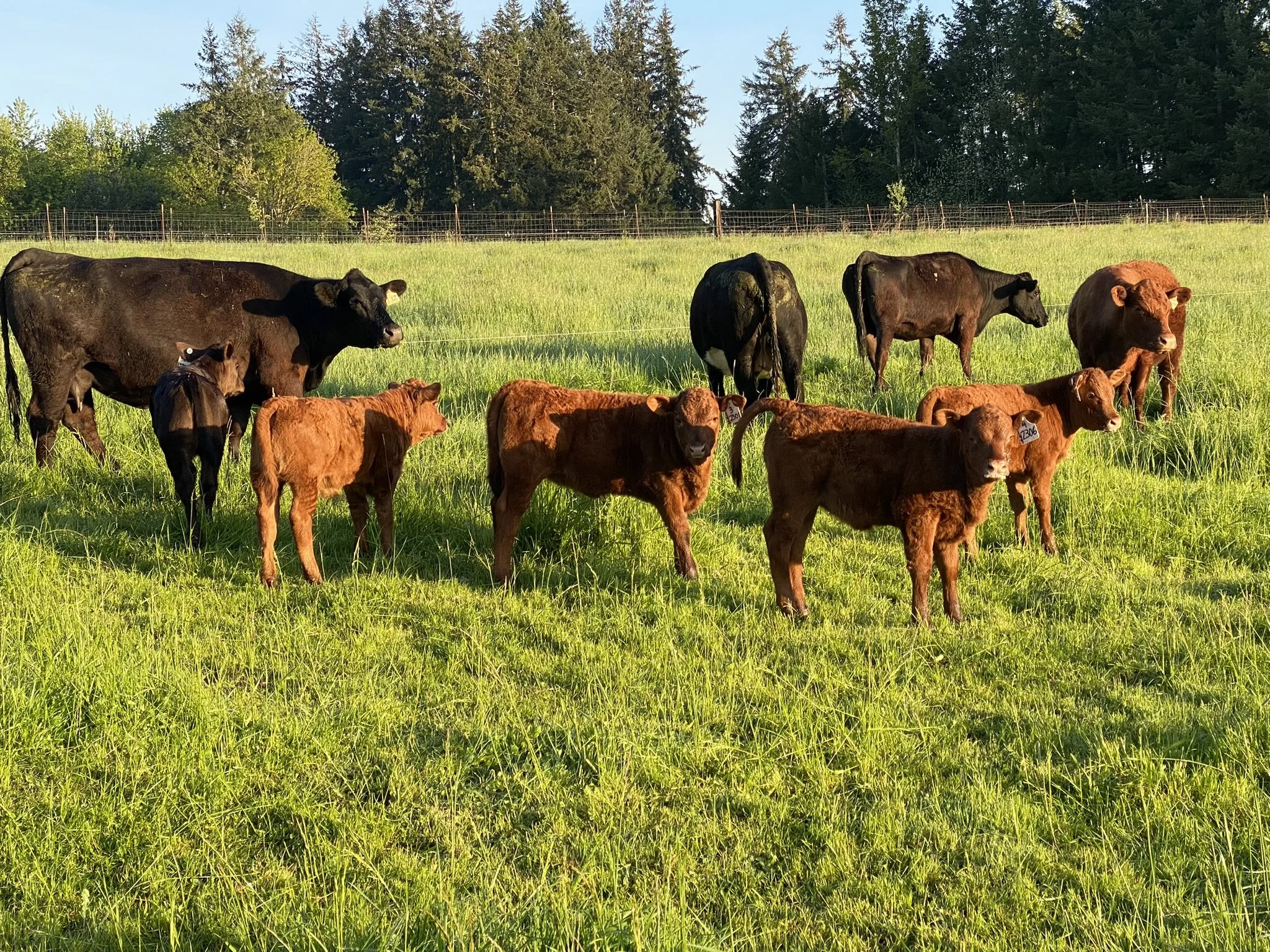
Meet Your Farmer's Wife, Julia

When we first started our family I wanted to buy raw milk.

We found a farmer nearby, asked all the vetting questions and felt it was a good fit.

It was important to us that we were getting 100% grass-fed and raw milk from a clean source.

One day we showed up to the farm to pick up milk. While we were waiting, I wandered back to the milking barn.

The cow was in the milking stand munching on a bucket of grain.

There were bags and bags of conventional store bought grain lining the walls too.

Some empty, some full, some half full, so I knew this wasn’t the first time.

What else weren’t they telling me…

I left feeling very skeptical about my farmer.

All of a sudden I couldn’t trust what he told me about how he was producing the milk.

I asked him about it and he said that yes they did feed grain and it was still grass fed milk…hummm…

What in the world?

Even if it was a little white lie that sometimes they fed their grass fed cows grain, I no longer felt like I could trust him.

This is when we decided to buy our own milk cow, and raise our own meats.

I needed to be certain I was getting the food that met our high standards.

I know how it feels to be really picky about getting the best quality food and not quite trusting the source.

I share this story because I want you to know I’ve been on both sides.

Let me share a little more of my past and what part I play on our farm.

I’m affectionately calling myself, “The Farmer’s wife” but we all know know:

“Behind every great man, there is a great woman”


A Horse Crazy Girl

As a little girl I adored horses. I grew up with dogs and cats, a big garden and plastic horses.

I was that little girl with nose and hands pressed up against the backseat window whispering, “horrrrrsssseeeessss” whenever we drove.

I begged and begged for my own horse.

When I was 8 years old my mom started taking me to horseback riding lessons.
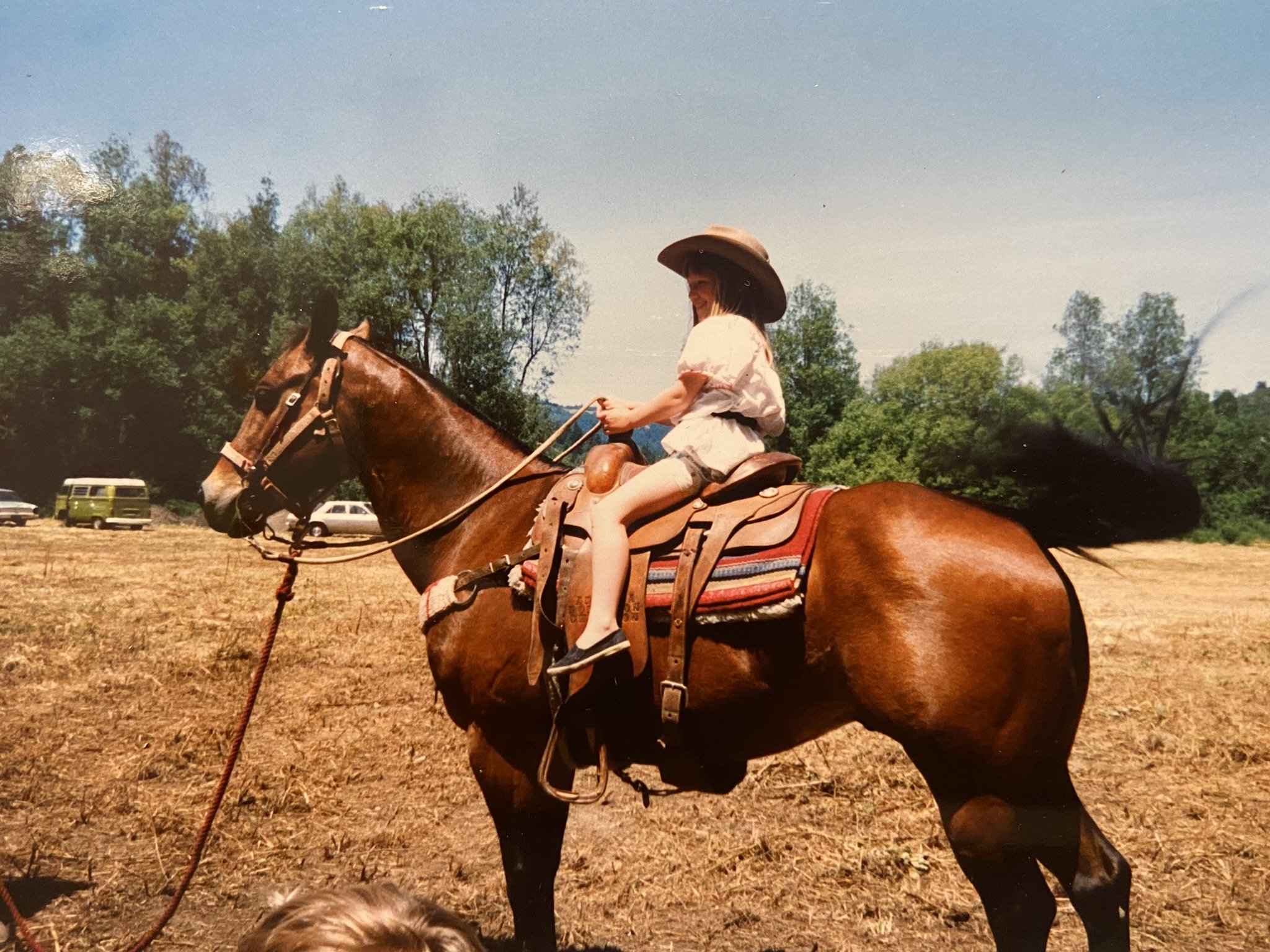
I fell deeper in love each week I got to hang out at the barn.
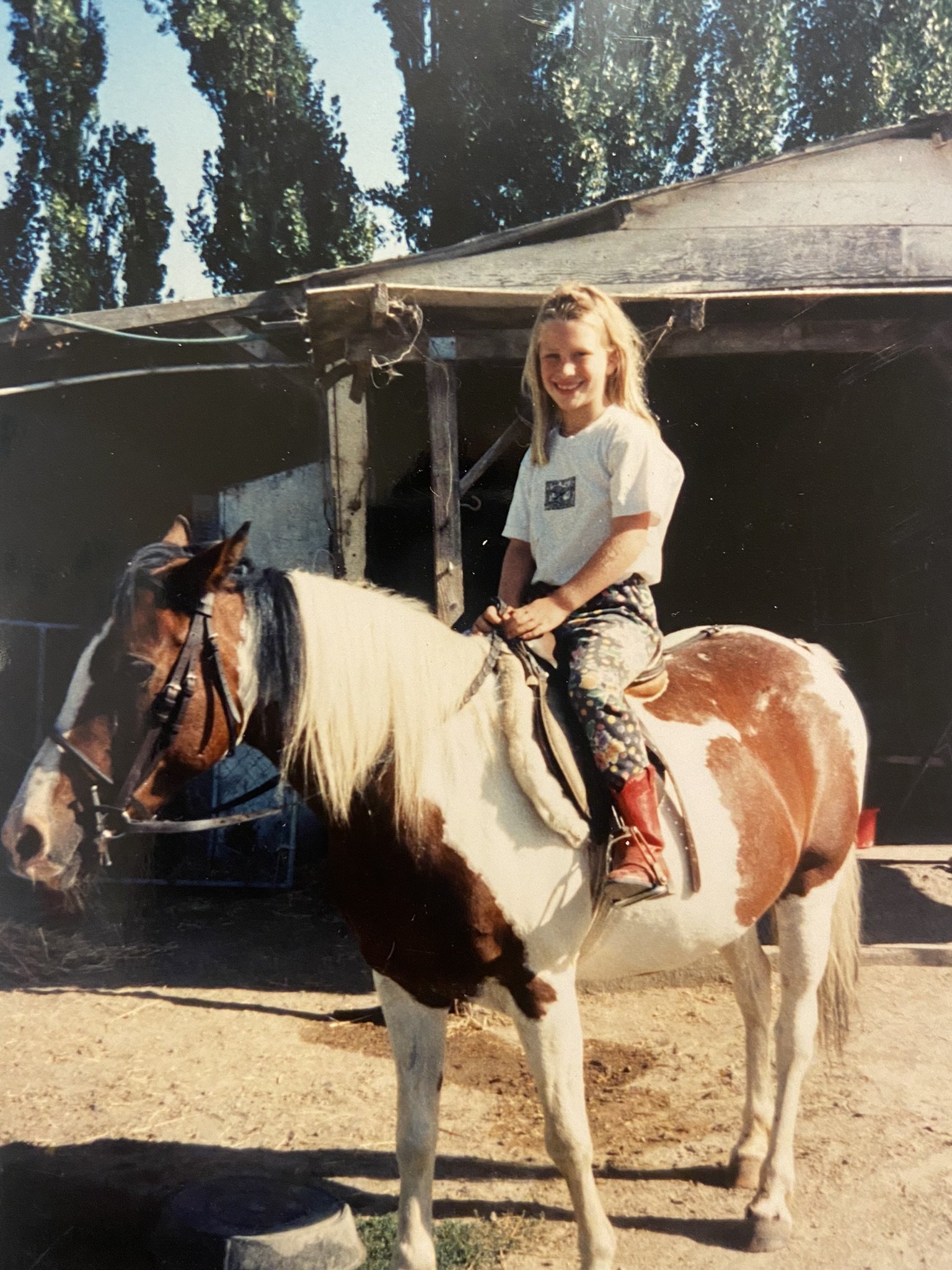
I loved brushing tails, cleaning up poo, washing water troughs, and my instructor’s daughter quickly became my best friend.

We played in the rain, rode in the mud, raced up and down the vineyard rows playing cowboys and Indians.

Every spare moment of my time was spent thinking and dreaming about horses.

I was such a lucky girl to have a mom ready to support my passion.

I came home from the barn each time muddy, dusty, exhausted and elated.


My first hose was a black and white pony named Scirocco. He was stubborn and had a mind of his own.

A perfect match for a girl learning to assert herself in the world.

When I was 12 we moved from California to Idaho and I told my mom,

“I either need to take my best friend or this pony, Scirocco.” She bought the pony.

I got my second horse, Monkey, when I was in middle school. She was a special horse.

I trained and showed showed her in 4-H, winning lots of trophies.

She was my loyal and steady partner for 20 years. She passed away last summer and I miss her every day.

I started studying horticulture, because I thought I needed to go to college.

I loved it…but I loved my horses more.

So I went away to a trade school in Colorado to learn Parelli Natural Horsemanship.

I became a certified instructor and taught the Parelli method. I specialized in communication between horse and human.

It was all about building a relationship of trust with your horse.


A Farmer’s Wife

Then I met and married Blake in my mid 20’s
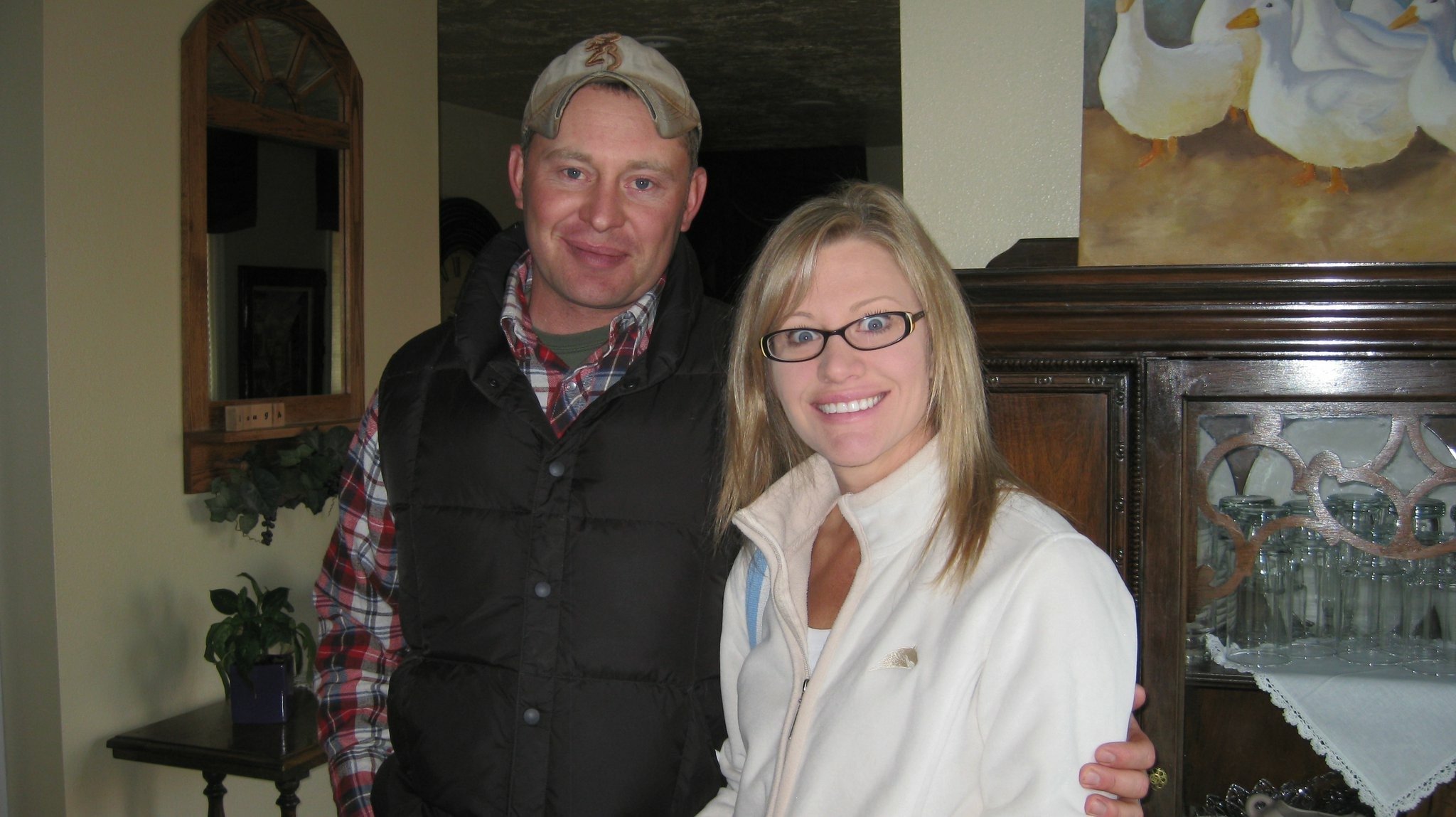
When our first baby came along I chose to have a natural birth with midwives.

During that first pregnancy I started to come to terms with the fact that everything I put in or on my body would get to my unborn baby.

Wow, what a wakeup call!

I cut out the skittles, snickers and sprite.

I started buying raw milk and making my own yogurt.

I learned about the benefits of bone broth.

I started buying organic foods and switching out the dryer sheets for Lavender essential oil.

I started feeding our dogs a raw diet, buying chicken necks and feet from the butcher.

I dove into the world of fermented foods like sauerkraut and sourdough.

This has been a growing and developing skill for the last decade of my health journey.


We bought our first milk cow because we couldn’t trust the farmer we were buying it from.

And it started the “grow your own food” addiction that led me to becoming your farmer too!


So when I say, ”We grow the kind of meat that you can feel confident feeding your kids” it’s true.

And it’s because for the last decade I’ve been living the natural life, it’s bubbling over into sharing our meat with you.


My role on the farm has been in the business planning. I write the emails and study our finances.

I sign us up for mindset coaching, Farmer’s Markets and Expos.

I keep an eye on the farm during the day when Blakes at work.

I create concoctions of natural medicines when a cow has pink eye or mastitis. I do a lot of animal husbandry like mixing up homemade fly spray with essential oils.

If it’s going on my animal that I’m raising for food, I want to know it’s safe enough to eat right now.

This fly spray was for the cows, made out of apple cider vinegar, essential oils and water.


Midwifery on the farm

I’m also Blake’s right hand lady when there are big events like births that need a woman’s touch.


One time when we lived in Colorado we had a pig who was giving birth for the first time.

She was struggling.

She’d been in labor for several hours and had more babies she couldn’t push out. We had bred her too young and her hips were too narrow to let the piglets out.

After lots of trying to reach in and pull, only to be squeezed to numbness, Blake asked me to try because my hands were smaller.

I tried, but also had little luck.

She was not going to make it, and her piglets were not going to make it either.

So we made a very hard decision to put her down, perform a c-section, save the piglets and utilize her meat.

We worked all through the night, delivering piglets, feeding piglets, butchering the sow and freezing the meat so that nothing went to waste.

Harper, our oldest son, was just a baby and he slept through it all.

All went according to plan. I had 10 piglets in my basement that needed bottle fed every 2 hours for a month.

It was like I had 11 children for a short time.

I never imagined that I would be doing that.

Mind you, I loved horses…

But as a mama myself, I felt such a responsibility to help those piglets survive.

And I stood by my farmer husband, at his side the whole night, doing what dirty job needed done.


sheep on the fly

Here’s a funny story Blake tells all the time when he’s bragging about me.

This is what being a “Farmer’s Wife” looks like.

I show up for all the major activities just to put my nurturing eyes on things and make sure all the animals are being handled as gentle as possible.

I throw in my feminine perspective all the time-and Blake’s a good sport about it.

We can now calmly load pigs and cows into the trailer without any foul words flying.

Which is really important because if we are stressed the animals get worked up too.

One day I was lookin for a reason to get out of the house with the kids and I mosied to the sheep barn where Blake was trimming hooves.

I was holding our baby, Calvin on my hip, and popped in for a short visit to offer my - you know- “feminine perspective”.

I was standing there watching him sort sheep in a pretty small corral and as he went to grab a lamb it jumped up to escape.

As it went flying past me, I caught it mid air with one hand, other hand holding the baby on my hip!

I was as shocked as he was. But there I stood, lamb on one side and baby on the other.


4-wheeler birth

One last story about my role on the farm as the “Farmer’s Wife”

This one happened just last week.

We were at the start of our calving season. Blake does night checks every evening before he goes to bed.

I had just brushed my teeth and slid down under my covers when he headed out.

A few minutes later I hear my phone ring…

It’s Blake calling from the pasture. He sounded out of breath and he said,

“I need help, bring a savvy string”

A savvy string is 6’ long thin rope that I used in my horse training days. They are very handy for all kinds of jobs.

I grit my teeth, put on my chore clothes overtop my PJs, grabbed a head-lamp and my savvy string and headed out.

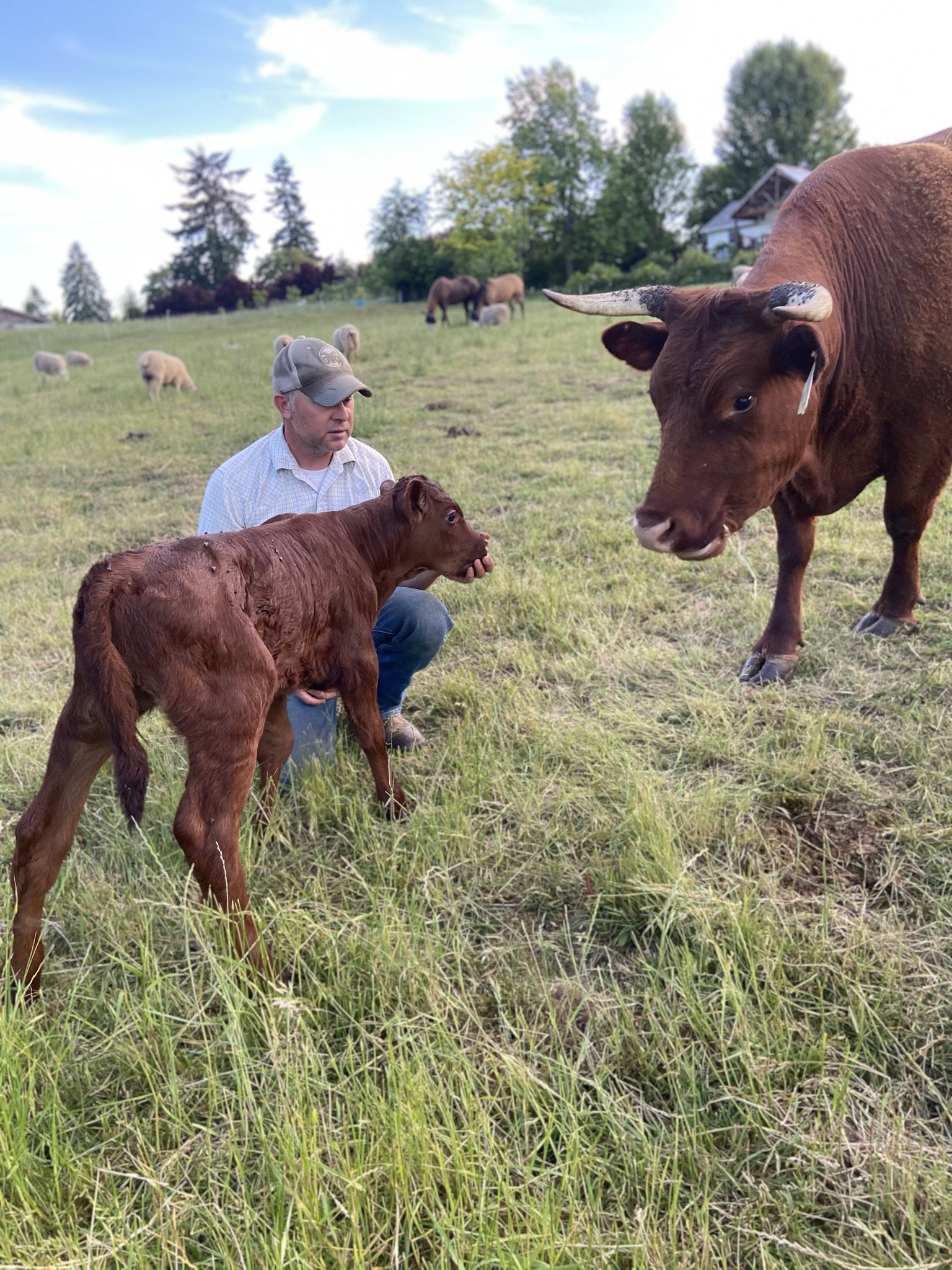
We had a first time mama cow struggling to give birth.

Calves should come out front feet first, with the head following.

This calf was coming out with one front leg and a nose. It was stuck.

Blake tried to reach in and find the other foot, thinking it would slide out easier if both front feet presented.

To no avail.

It was a very tight hip cavity, the leg was nowhere to be found.

We tied a rope to the one front foot we could find and tried to pull.

Sometimes mama’s just need a little help at the very end of a long labor.

Calf wasn’t budging.

Mama was up and down, walking around, trying to adjust herself and slip that baby out.

We were at the very critical turning point in birth where we have to act fast.

We could loose the calf, the cow, or worse…both.

So we got the 4-wheeler and a bigger rope.

We tied the rope onto the machine and I slowly pressed the throttle to creep forward.

I first just held tension, hoping I could assist her contractions.

Then I gave it more gas, pulling even harder, then more.
Finally…the shoulders presented and the calf slipped out the rest of the way. Wshew!

Mama was so relieved and so were we!

A little bit of a traumatic birth but mama recovered beautifully and the calf lived.

WIN-WIN


Sometimes we do really hard things on the farm.

We always do our best, and pray a lot for guidance and support from God above.

We always treat our animals with love and dignity and try to assist the natural rhythm of life.

We steward our animals with care and consideration, honoring that they are living beings, blessing our lives with purpose and nourishment.


As the “Farmer’s Wife” I offer up my feminine perspective often.

I lend an extra set of hands. I do a lot of emailing, communicating and bookwork.

I’m often a great brainstorming buddy and I do lots of running back and forth to the butcher to pick up meat.

All while first being Mom to these three little boys.

Blake and I are a great team.

We believe wholeheartedly that we are raising some of the best nutrient-dense and clean food around.

The animals are cared for spiritually, physically and nutritionally.

Sometimes life on the farm is touchy, just as quickly as an animal is born one can also die.

My hope in sharing these stories was a little peek inside who I am and why I’m qualified to grow your food with integrity.

Do you have any similar stories to add?

I’d love to hear them in the comments.

Meet Your Farmer, Blake

Blake was born and raised in Vernal, Utah as the youngest of six. His dad farmed crops and livestock, his mom was a school teacher. He always had farm chores to do like cleaning pig pens or unwrapping expired hostess treats by the hundreds to feed to the pigs.

One winter he was cleaning pig pens, he might have been 10 years old, and it was his job to put new straw in the pig pens. He carried a bale of straw in his Radio Flyer red wagon, walking on the edge of the iced over manure pond. But on the way back he walked across the middle and broke through the ice. He nearly drowned. Luckily his cousin was nearby and pulled him out.

His entrepreneurial spirit has been alive for quite some time. He learned from his older brother that the expired hostess twinkies could be sold for a quarter to his friends in the school cafeteria, rather than wasting them on pigs. His teacher caught on quickly and had to call his parents for a meeting.

In high school he took “Foods 1, 2, & 3” which were classes about different cultures and their foods, different methods of cooking and hands on cooking. This is so fun to know, because today he still LOVES to cook and LOVES good food. In fact most of the recipes I share are ones Blake finds and shares with me, then I try them out on our family and if they are good, share them with you!

After high school graduation, he went on a mission to Germany from the time he was 19-21. He spent two years there serving the people and teaching about the Gospel of Jesus Christ. Hardest two years of his life, he still remembers.

Learning a new language, being in an unfamiliar place, far far away from home. He became self sufficient really fast. You get up, exercise, make your bed, study, and get going. You cook your own food, do your own laundry and try to find ways to stay busy.

Next time you see Blake at the Farmer’s Market you can ask him how much German he remembers.

He came home and went to Utah State University. He graduated with a degree in Wildlife Biology. Each summer between terms he would spend fighting wildfires and make enough money to pay for his next year of school. As a college student he would pride himself on eating on a budget of $20 a week. Tortillas and cheese, maybe some eggs (back when they were $1.50 a dozen) and a gallon of milk. He might buy some chicken or eat some antelope that he had hunted on his quesadilla.

He took his horse to college his senior year and would ride it on the weekends. He kept it at a doctor’s ranch in exchange for working for him doing little side jobs.

3 Generations of Bell farmers: Grandpa, Dad and Blake, around 2010

After graduating college he took a job in Arizona with USDA Wildlife Services doing livestock protection, working on a black bear study, as well as a predator study involving black bear, mountain lions and wolves. His next job took him to Craig, Colorado doing livestock protection for sheep ranchers. After that he worked in Denver, Colorado at a Air Force Base working to prevent wildlife strikes with military aircraft.

This is when it gets REALLY interesting….drumroll…

This is when Julia enters the picture!

When working on the Air Force base he met me and we got married a year later.

We got married in the winter of 2010

Our most memorable wedding gift was a wild, untrained, untouchable mule. Still not sure if it was a gift or a curse, but it makes for a fun story!

Two years later we have a baby on the way and we buy our first house in Colorado.


Shortly after our baby arrived Blake started drawing up plans on his vision board for our 40 acre property. I guess he was ready to settle in. He had plans for barns, fences, fruit trees, garden spaces, pigs, chickens, cows, goats, sheep, turkeys, berry bushes and more.

This is when our BIG dreams of homesteading started.

This is a rough sketch of Blake’s plans for our farm in Colorado.


A couple years of growing our own meat, eggs and veggies and we started growing a few extra to sell. Blake always did this farming after his day job as a Wildlife Biologist.

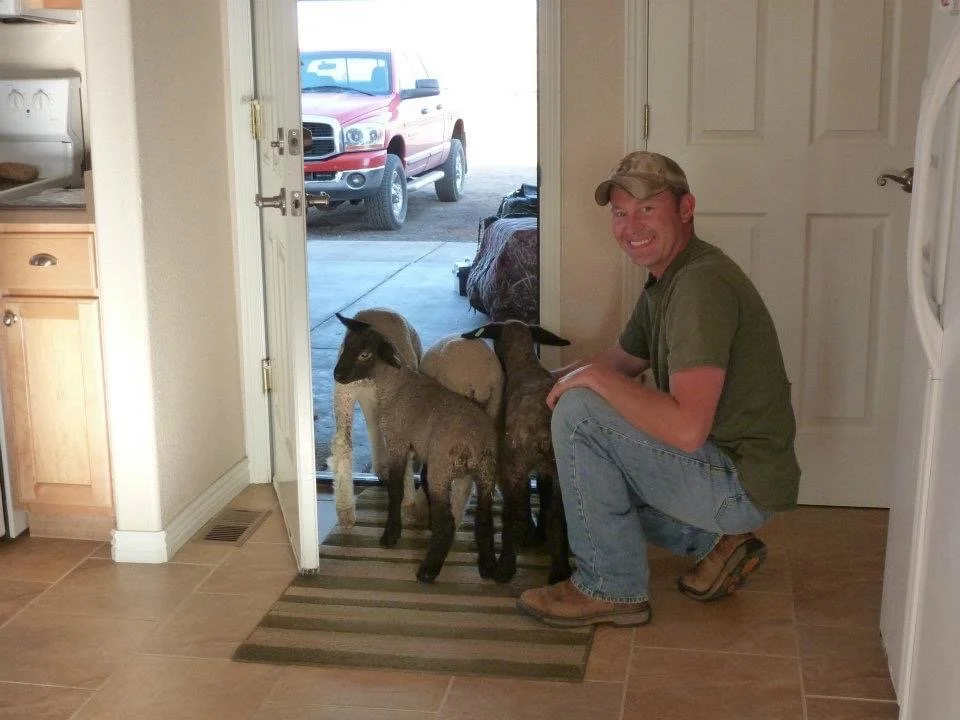
Bottle lambs at our Colorado house, were known to come into the kitchen looking for their next meal. This was around 2012


He was eleven years into his career as a Wildlife Biologist and he started to wonder, is there more? He wanted more. He wanted to show up to a job he was on fire for, but was not feeling that lit up by his mundane 8-5.

He was applying for jobs within the USDA umbrella, thinking that maybe a job in a different state would bring more excitement. We applied for a job in Roseburg, Oregon and took a road trip to interview in person!

We loved the area, we were amazed at how lush the grass was, we didn’t get the job but we moved here anyway. That was 6 years ago. He left his career as a Wildlife Biologist to be your farmer.


You never know if it’s going to work out until you try!

Our first fall in Oregon at Nourished WIth Nature Farm, 2017


He has a deep passion for regenerative farming, for intensive grazing, for reversing desertification and building an ecosystem teeming with beneficial bacteria, microryza, improved soil health and healthy biodiverse pastures that turn into nutrient dense meats!


He is still chasing the dream to be able to farm full time. But he still has a day job as a warehouse manager at a grass seed company that pays the bills and keeps the lights on.

A couple years ago we knew we had to start having vacations if we were going to be able to withstand the long hours and stress levels that are involved in having a business.


95% of new farmers go out of business within the first 5 years. This is our sixth year and this year we are excited to be able to hire help. We have been steadily growing and working our tails off and this is all because Blake is really stubborn and bull headed and won’t give up on his dream.


Many, many, many days we ask ourselves if working two jobs while raising a family is worth it. We ask ourselves if we are doing the right thing for our mental and emotional health. And sometimes it feels like too much. Then the rain lets up and we get a sunny day and we get giddy watching the grass grow.

He listens to podcasts daily about regenerative farming. His favorite show right now is Clarkson’s Farm. He loves the land and the animals with all he is. Its in his blood to work with animals and he finds so much joy in raising them in a way that honors nature’s way and is nourishing to our health.


He loves getting up and doing his chores first thing. It gives him a sense of accomplishment to have put in a couple hours of work before the sun rises.

He loves interacting with you at the Farmer’s Markets. YOU are the reason we can even have this business. We are grateful for YOU, our customers. Without you being mindful and selective about who you get your food from, we wouldn’t be farming like this.


Leave a comment below of something that struck a cord with you or something you appreciate about Blake and his hard work ethic.

How To Make Candles With Tallow

I love to give a purpose to every usable piece of an animal when we harvest it.

I often think about how good the Native American people were at this. They would eat all the organ meats, use the intestines, use the blood, use the hide, the hooves, the head and lastly use the meat.

As the human race has evolved we have become selective- we make the kill just for the prime cuts of meat because we no longer make our own clothes, shoes, candles or sometimes even bone broth.

But to me, and to you, raising animals in small batches, getting back to our roots, returning to slow food is where we are headed.

Honoring the whole animal’s life, it’s sacrifice, and believing it’s such a gift to us…is where we are headed.

So little by little I am trying to find many uses for every part of the animal.

Today I’m sharing with you how to make beef tallow candles.

Tallow is the excess fat from around the kidneys or under the skin that is not attached to any cut of meat and isn’t needed in the ground beef.


health benefits

Most of the benefits you associate with grass-fed and finished beef like:

  • Conjugated Linoleic Acid

  • Omega 3’s

  • and Vitamin E

are ONLY found in the fat! Isn’t that amazing!


other uses

Beef tallow is a great cooking fat. You can use it for deep frying, seasoning cast iron skillets and making body butter.

Seasoning a skillet and making body butter also get into your body, even though you may think you’re not eating it.

The skin is your largest organ, so you will be absorbing the tallow into your body when you lotion up your hands.

And as you cook in your cast iron pan, seasoned with tallow, it will mix with your food and you’ll eat it that way.


WHY TALLOW CANDLES

Back to candles…

I gave up scented candles many years ago when I completely revamped my home into a toxin free environment. Traditional candles are made from either paraffin wax or the more recently popular option - soy.

Both are really bad for you.

“Most candles today are made of paraffin wax which creates highly toxic benzene and toluene when burned (both are known carcinogens). In fact, the toxins released from paraffin candles are the same as those found in diesel fuel fumes and are linked to asthma and lung cancer.” - Melanie Rousselet of ARTISANE-NYC blog

Soy candles are usually not 100% soy, but have some paraffin in them too. We keep soy out of our animal feeds and I keep it out of my home pantry because of its estrogenic similarities. I don’t need any help raising my estrogen levels, most women are estrogen dominant as it is. It’s usually chemically extruded and grown with a lot of pesticides as well.

One last benefit to this DIY candle is that you can control the fragrance. Most synthetic fragrances used in any store bought candle are so bad for you. I once read that burning a traditional candle and breathing in it’s fake fragrances is equal to smoking a pack of cigarettes.

I used Young Living Essential Oils in my tallow candles, and I completely trust their purity. Let me know if you want help getting some too.


local & sustainable

Making beef tallow candles means you can keep it local

Grab the tallow from us and do it yourself at home.

Having a few candles on hand is important for emergency preparedness. If the power goes out for a long period of time candle light can be great.

I also love to burn these candles in the bath when I want to relax and unwind.

We have a candle-lit dinner every year on the winter solstice as we celebrate the returning of the light.

They make great gifts too!


I learned how to make these candles for our school group this year.

Here’s the recipe so you can do it too!

We have tallow in the farm store.

You can choose unrendered chunks if you want the whole experience or some that I have already rendered for you if you want to skip a step.


INSTRUCTIONS

STEP 1:

Come by our farm store and get some beef tallow. Partially thaw it then chop finely or use a meat grinder. The smaller the pieces the better it will melt. Add it to a slow cooker on low and watch it closely. You want it to just melt, not boil.

STEP 2:

Strain the liquid from the bits of meat into a glass jar. I have a glass pyrex measuring cup with a pour spout that worked great. You can eat the bits of meat. Try adding them to spaghetti or meatloaf. You can also feed them to chickens or dogs in small batches as a nice treat.

STEP 3:

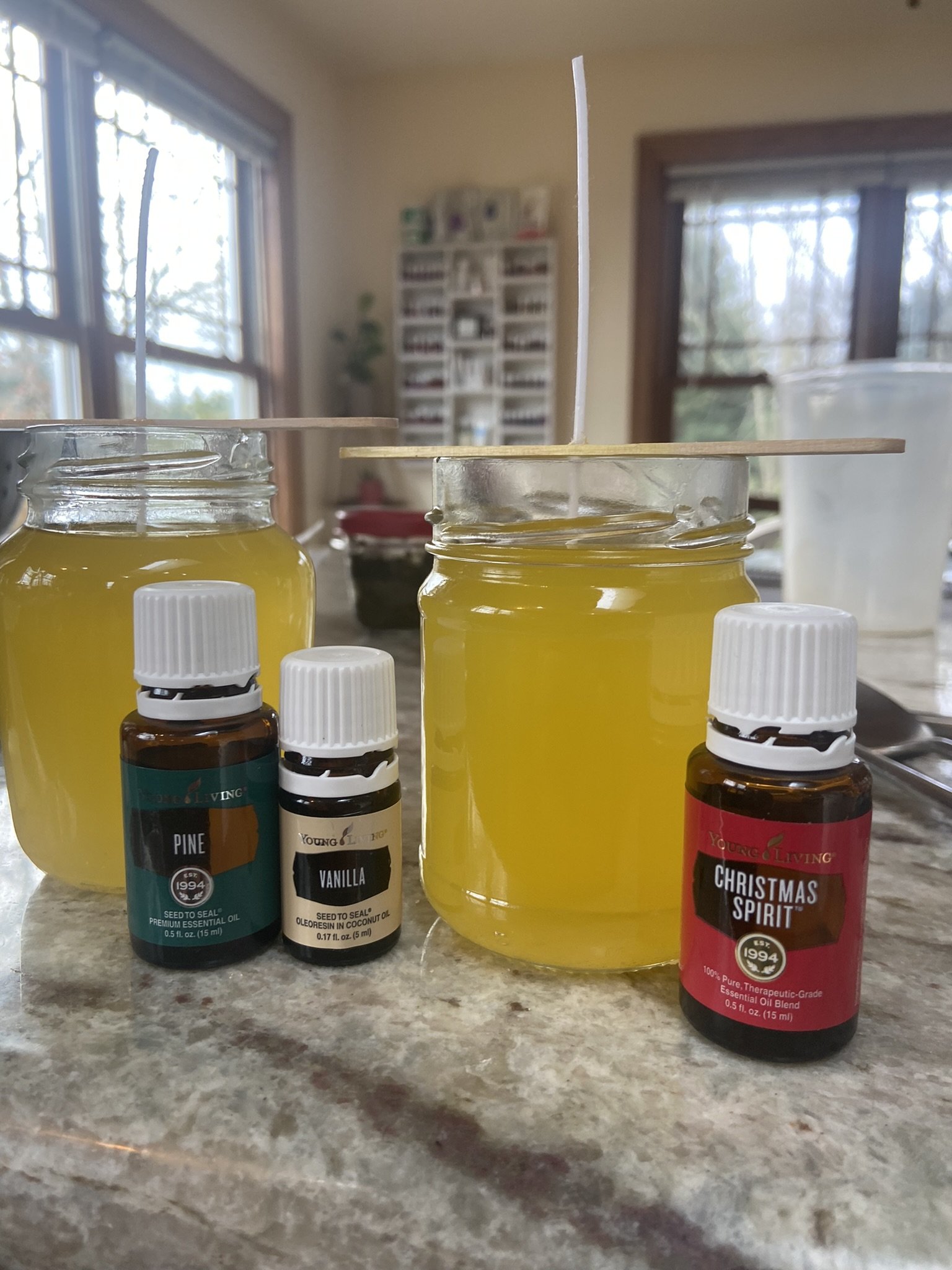
Prepare your jars. I used a few jars from the recycling and removed the label. This was a mustard jar, but any glass condiment, pickle, olive or honey jar would work great. If you have extra sticky stubborn glue on the jar try using lemon oil! Works great, just rub a drop on the glue and wipe it off with a paper towel. I used cotton, lead-free wicks that I found on Amazon, but you can also try just cotton twine. Find a way to tape the wick to the bottom of the jar. Then using a popsicle stick with a hole drilled in it, feed the wick up through. This will hold it in place while the tallow cools and hardens.

STEP 4:

Carefully pour in your hot liquid tallow. Pour around the popsicle stick to avoid spills.

STEP 5:

You can add in essential oils for the smell, but it’s optional.

I made these for the holidays in the month of December. I used Young Livings Christmas Spirit in one and Vanilla Pine in the other. Please don’t use grocery store oils, reach out to me if you want help ordering some high quality health giving oils.

I used about 15 drops of oils total. The smell was very subtle. I was pleasantly surprised at how neutral the tallow smelled, not beefy at all. When burning the candle there was no smell of tallow either.

STEP 6:

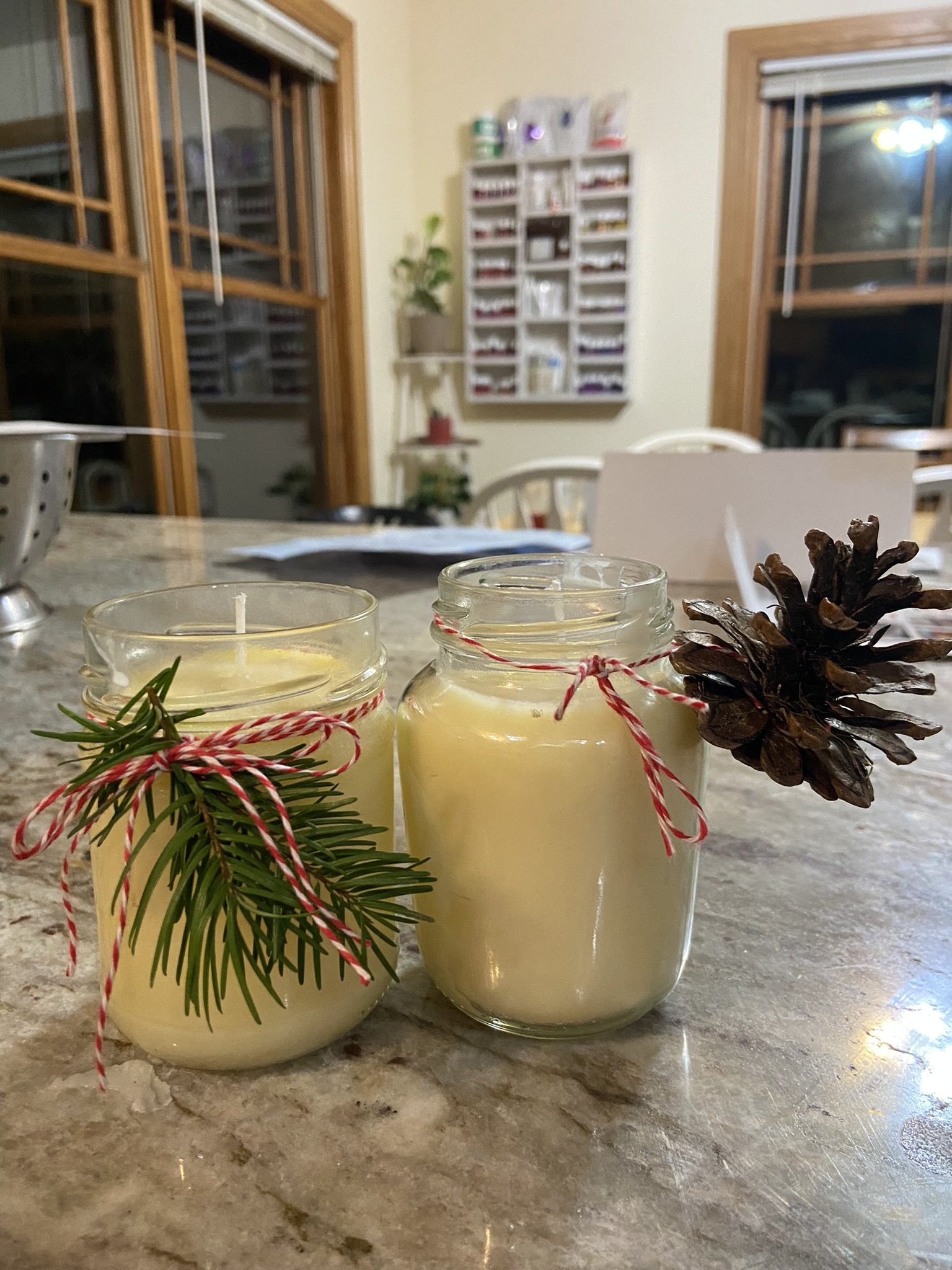
Once the tallow cools it changes color to a creamy white and gets very hard. Remove the popsicle stick, trim the wick and you can decorate the candle jars if you like. Add a twine, some greenery or dried flowers as embellishments. You can tip the candle completely upside down and it won’t move.

Enjoy a relaxing candle-lit bath, tuck them away for emergencies or gift them to friends.

Enjoy being crafty!

I can’t wait to see your creations!

The Land Of Nordman

A Waldorf inspired story about the winter solstice and making beef tallow candles

By Julia Bell


I wrote this story I’m about to share with you for a group of school children during Winter Solstice.

Since the start of the school year my kids Waldorf school group has been coming out to our farm for field trips, and their experiences are woven into the curriculum.

This December, as we approached the shortest day of the year and they focused on making gifts, I led them through making candles out of beef tallow.

This is the story I wrote to set the stage for candle making. I hope you enjoy the rich underlying tones of resourcefulness, love and reverence we hold for our animals!


This story starts in the winter time, in a land far far away where there lived a village of people, and the village was named Nordman. They had lived in this same high mountain village for many generations. Their great great grandparents had settled the land, their parents continued to farm the land and live in harmony with it. Now they were raising their children in this same beautiful village nestled in the mountains.

The people did not have grocery stores, but rather they grew things, made things and gathered things.

They made baskets from reeds they gathered. They made bows and arrows from the forest twigs, built their own houses from bricks they formed from mud, and they made tools from stone they chipped away on until they were razor sharp. They gathered items they needed like logs, wild berries, flowers. They also traded goods with their neighbors when someone else had something they needed. Each family specialized in one main thing, then they shared with each other.

Some families were very very good at making clothes. They grew the sheep, sheared the sheep, spun the wool into yarn, then knitted wonderful things like coats, hats, gloves and socks.

Some families were shoemakers. They used great big needles that they made out of porcupine quills. They sewed pieces of leather together to make shoes of all sizes and for all ages of people. They were beautiful, wonderful shoes.

Some families were gardeners. They grew cotton for making pillows and comforters. They grew flowers for dying the wool beautiful bright colors. Some gardeners grew herbs for medicines, poultices and tinctures. Beautiful marigolds turned white wool into a bright yellow color as warm as the sun. There were hollyhocks of a deep sky blue color that were exquisite when knitted into a warm winter hat. All the children loved to wear their blue hats in the dark, cold, rainy winter time.

But ALL families had these 3 things:

  • 1 cow for milking

  • 10 chickens for eggs and meat

  • And a great big garden that grew potatoes, onions, corn and grains to feed themselves.

Every year, in about March, when the skies were still stormy, but little flowers were popping up out of the ground, the families milk cow gave birth to a calf. The children loved to welcome the new life into the world by tying a beautiful red and white twine around its neck. It was a gift to the new life and a welcome sign…as if to say:

“We’ve been patiently waiting your arrival ALLLLL winter long! This means that spring is very near!”

Calvin, age 5. “The Calf”

As the calf grew bigger and stronger on his mama’s milk, the days started to get warmer. The days also started to give more light. The rains came some days, but not everyday, like they had done in the winter time. The grass, which had been sleeping all winter, started to wake up. It was hungry for light and warmth so it reached its arms up high towards the sun. The earth gave it a nice long drink with fresh cool rainwater at night, and during the day the warm golden sun nourished the grass with it’s golden rays.

As the days got longer and the grass grew taller, the calf grew bigger too. Now he was big and bulky and strong and eating grass more often than he drank his mama’s milk. Soon he was nearly as large as his mama and he didn’t need her much anymore.

The rains stopped coming as often and soon the sun shone for more than half the day. There was more light than darkness and so the calf had more time to eat and grow and lay in the sun. He was getting rounder and plumper every single day!

Calf lying under a shady tree, by Julia

Some days the sun shone so hot that the cows liked to find a big shady oak tree to lay under while they chewed their cud. The hot sunny days without much rain turned the grass a little brown and crispy and the cows didn’t find it to be so yummy anymore.

By the fall time the people of the village started to think about harvesting their gardens. Their corn and wheat had dried up and was ready to grind into polenta and flour.

Their pumpkins were a deep golden orange color and their apples were dark dark red. The fat calf was also ready to be harvested.

There was to be a great celebration in the land of Nordman. The cotton farmers were harvesting their crop to make into pillows, comforters and clothes.

The flower farmers harvested their flowers to dry and make dyes to color their clothes. And each family harvested their fattened calf.

The first day of the great celebration the calf was killed and they lifted their voices to the heavens. They sang songs of thankfulness for the calf’s life and for the nourishment it would bring them in the winter months ahead.

Next they skinned the hide and sold it to the shoemaker. He would carefully tan the leather to make into beautiful shoes for the people of his village.

The meat was then cut into small pieces and cured with salt, then carefully stored.

The bones were put into a giant pot with water, salt, herbs and vegetables to make a bone broth stew. This stew would nourish and sustain their bodies for the winter months ahead. It would give them the strength they needed heading into winter when the sunlight was less and the rains make them cold everyday.

The cows fat was trimmed from the meat and collected to be made into candles. Since families had no electricity in this high mountain village, they relied on candlelight for their night time studies, games and stories.

Rance, age 7. The candlemaker in his home with his firewood storage.

Even when the days got shorter and the sunlight grew dimmer, and they could barely remember the days when the green lush grass covered the pastures, they would have candles to light the room.

The candlelight reminded them of the brighter days that would return in the springtime.

And the light gave them time in the evenings after supper to read, play the fiddle, play games, hear stories, and make things with their hands.

It brought the families so much joy to have extra light in their homes. They could learn new songs, practice their knitting and crocheting, hear new stories-all because they had candle light.

And so this story of the fattened calf ends, the story of the people of Nordman in a land far far away.

Harper, age 10 “The Land of Nordman”


As this story relates to our farm, we actually raise our calves for two seasons before we harvest them. For the purpose of creating this story I say it was one season of life and then the harvest. The true bits of this story is that we believe each new life on the farm is a gift and treated with reverence for the nourishment it will bring. We give thanks when we butcher it and we use every part of the animal we can.

The bit about the people of Nordman living in the same village and farming the same land as their ancestors feels close to my heart because farming has been in Blake’s lineage as far back as he can remember. Starting with our boys being raised on this farm, Blake grew up farming, his Dad and Grandpa both grew livestock and crops.

I will be sharing how to make beef tallow candles in another blog post coming up!

Leave a comment below: what trade would your family have specialized in if they lived in this community so long ago?

3 Holiday Cookie Recipes Using Pastured Pork Lard

I have a special treat for you just in time for the Holidays!

3 Special Cookie recipes that use the healthy pastured pork lard I’m always raving about!

I found these recipes in The Fat Kitchen Cookbook by Andrea Chesman, which I highly recommend as a cookbook.

It dives deep into all the traditional ways you can use animal fats in cooking, baking and frying and WHY they are so healthy for you.

If you haven’t started using lard in your kitchen yet, these recipes will give you something to try and this blog post will help you see why:

7 Healthy Reasons To Eat Lard

All of these recipes work fabulous with coconut sugar or sucanat sugar, they make them a little bit healthier.

You won’t taste any porky flavor at all in your cookies, and they will be way better for you than cooking with crisco!

You’ll feel a special connection to your great grandparents as you cook with lard.

It’s what they used every day.


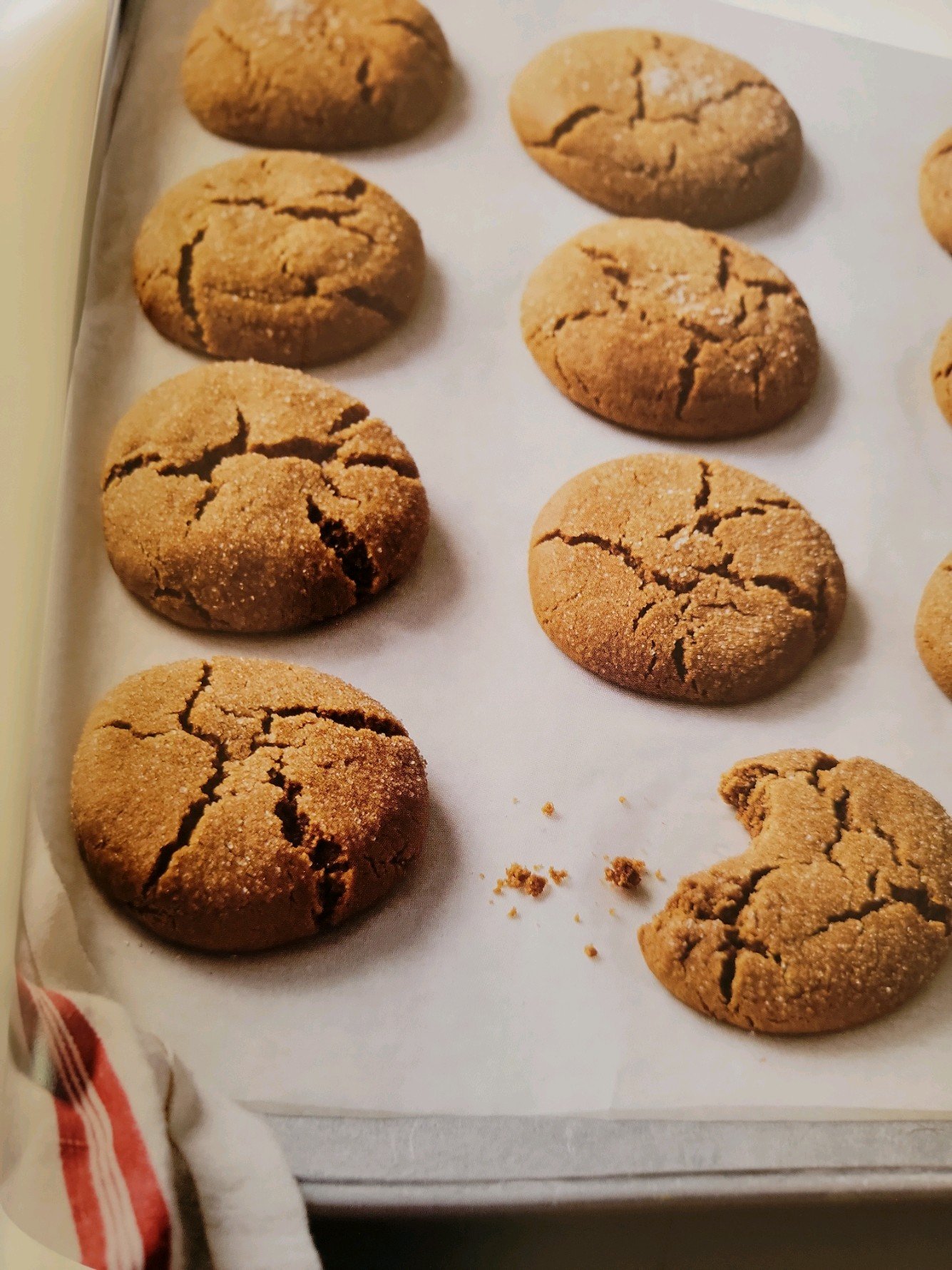
CRINKLE TOP MOLASSES COOKIES

Molasses was a common sweetener at a time when lard was the standard fat in kitchens throughout New England and the American South.

Makes about 36 cookies

Ingredients:

  • 3/4 cup Nourished With Nature Leaf Lard

  • 1 cup firmly packed coconut sugar (or sucanat or brown sugar)

  • 1/4 cup blackstrap molasses

  • 1 egg

  • 2 1/4 cups unbleached all purpose flour

  • 2 tsp baking soda

  • 1 tsp ground cinnamon

  • 1/2 tsp ground allspice

  • 1/2 tsp fine sea salt

  • 3 Tbsp granulated cane sugar

Instructions:

  1. Preheat the oven to 325 deg F. Line 3 baking sheets with parchment paper or use silicone baking mats.

  2. Combine the leaf lard and coconut sugar in a food processor and blend until smooth. Add the molasses and eggs and blend until smooth. Scrape down the sides of the bowel and then add the flour, baking soda, cinnamon, allspice and salt. Press until the dough forms a ball.

  3. Spoon the granulated sugar onto a small plate. Shape the dough into 1.5” balls, dip the top of the ball into the sugar and set them sugar side up on the cookie sheets about 2” apart.

  4. Bake one cookie sheet at a time, 13-16 minutes, just until set and the cookie appears dry. Slide the parchment paper off the cookie sheet and allow to cool before handling them. Store in an airtight container, they will keep well for a week.


Jam Thumbprint Cookies

Call them thumbprints, thimble cookies or Polish tea cookies. In Sweden, they are called hallongrottor, which means “raspberry caves”. With so many names from so many cultures and so many variations, lard seems as likely as butter in the dough. In any case, these are delicious, but not terribly sweet.

Makes about 60 cookies

Ingredients:

  • 2 1/4 cups unbleached all purpose flour

  • 1 cup powdered sugar (I make my own by grinding Organic Cane sugar), plus more for dusting.

  • 1 tsp fine sea salt

  • 1/2 teaspoon baking soda

  • 1/2 finely ground almonds

  • 1 (8oz) package cream cheese, softened

  • 3/4 cup Nourished With Nature Lard, at room temperature

  • 1/3-1/2 cup jam of your choice

Instructions:

  1. Sift together the flour, salt, sugar, soda then stir in the ground almonds.

  2. Combine the cream cheese and lard in a food processor and process until smooth. Add the vanilla and process until mixed. Add the dry ingredients and process until well blended.

  3. Form the dough into a ball and refrigerate for at least 30 minutes.

  4. Preheat the oven to 350 degrees. Line 3 large cookie sheets with parchment paper.

  5. Shape the dough into 1-inch balls. Place 1 1/2 inches apart on cookie sheets. Using your thumb or a sewing thimble make a generous indentation in the center of each cookie, twisting the tool to spread the opening. Using the tip of a pointed teaspoon (not a measuring spoon), fill each hole with 1/4-1/2 teaspoon jam. You want a generous amount of jam, but don’t overfill.

  6. Bake one cookie sheet at a time, 14-16 minutes, until light golden brown. Cool on wire racks. Dust lightly with powdered sugar before serving. You can store them in an airtight container for at least one week.


oatmeal-chocolate chip cookies

These are jumbo cookies, great for gifting or bringing to holiday parties.

Makes 24-30 cookies

ingredients:

  • 1 1/2 cup unbleached all purpose flour

  • 1 tsp baking powder

  • 1 tsp baking soda

  • 1 tsp fine sea salt

  • 1 tsp ground cinnamon

  • 3/4 cup Nourished With Nature Leaf Lard

  • 1 1/2 cup firmly packed coconut or sucanat sugar (or light brown sugar)

  • 2 eggs, plus 1 egg yolk

  • 1 1/2 tsp pure vanilla extract

  • 2 cups organic rolled oats

  • 2 cups chocolate chips

instructions:

  1. Preheat the oven to 375 degrees. Line a cookie sheet with parchment paper.

  2. Whisk together the flour, baking powder, baking soda, salt and cinnamon in a large bowl.

  3. Combine the lard and sugar in a food processor. Process until well blended. Add the eggs, egg yolk, and vanilla and process until smooth.

  4. Add the flour mixture to the food processor and process until blended. Return the dough to the bowl and mix in the oats and chocolate chips.

  5. For each cookie, drop one ice cream scoop of dough (about 2 rounded tablespoons) onto the parchment paper, placing them about 3 inches apart to allow the cookies to spread.

  6. Bake one cookie sheet at a time, for 11-13 minutes, until the cookies are light brown at the edges and dry to the touch, but still soft in the middle. Let the cookies cool on the pan for a few minutes, then slip the parchment paper with the cookies still on them to a counter to cool completely. If you store them in an airtight container, they will last a week, but they are so tasty it’s unlikely.

Now you have 3 new healthy cookie recipes to play around with for the Holidays!

Incorporating more lard into your baking is a great way to dose up consuming animal fats. I also love using lard over coconut oil because it’s local, more sustainable and less refined.

Give it a try! Let me know in the comments what you think!